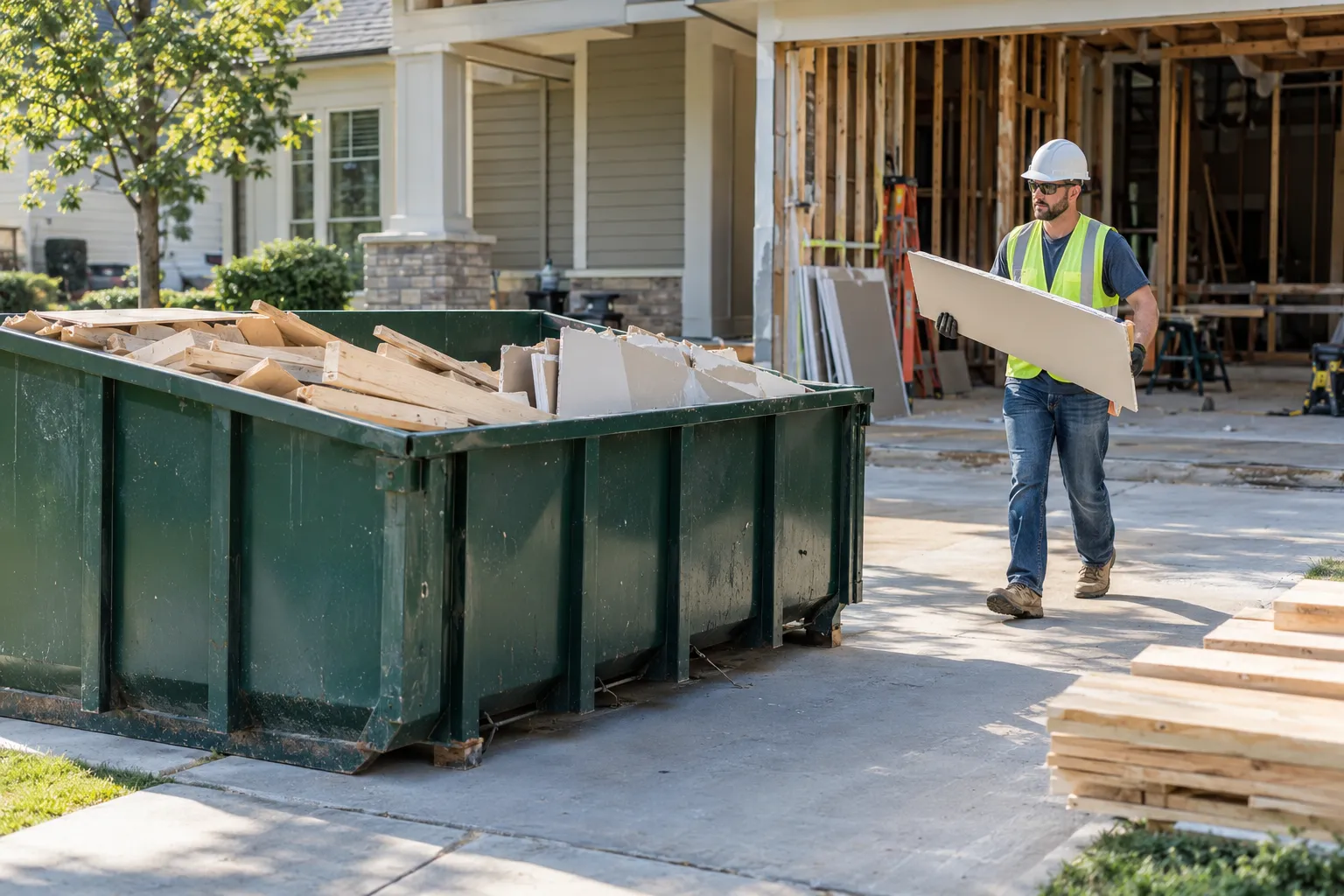
Weight can arrive before volume
Dense debris can reach a safe transport or disposal limit while a container still looks partly empty. Estimate concrete, masonry, soil, tile, roofing, and plaster separately from bulky wood or packaging. Give rough dimensions or counts when exact weight is unavailable.
Clean loads may have different rules
Some disposal facilities handle source-separated material differently from mixed construction waste. The operator must confirm the available options for this job and destination. Do not promise yourself a lower cost or a recycling outcome until it is included in the rental terms.
Regulated material stays out
Paint, solvents, fuel, batteries, asbestos-containing material, and other regulated waste need a separate, approved path. If a remodel uncovers an unknown product, stop and identify it before loading. A temporary dumpster is not a catch-all disposal method.
Make sorting workable on site
Create clearly marked staging zones before demolition starts. Put the heaviest category closest to its approved loading path, keep trip routes open, and brief everyone who will use the container. A five-minute site talk prevents well-meaning helpers from mixing the wrong material.
Working checklist
- Dense material estimated separately
- Unknown material held back
- Crew told what is accepted
- Fill line visible
- Weight distributed evenly
- Pickup access remains open
Need an address-specific answer?
Use the companion Construction page, then call with the site and debris details.
Call (678) 697-8928