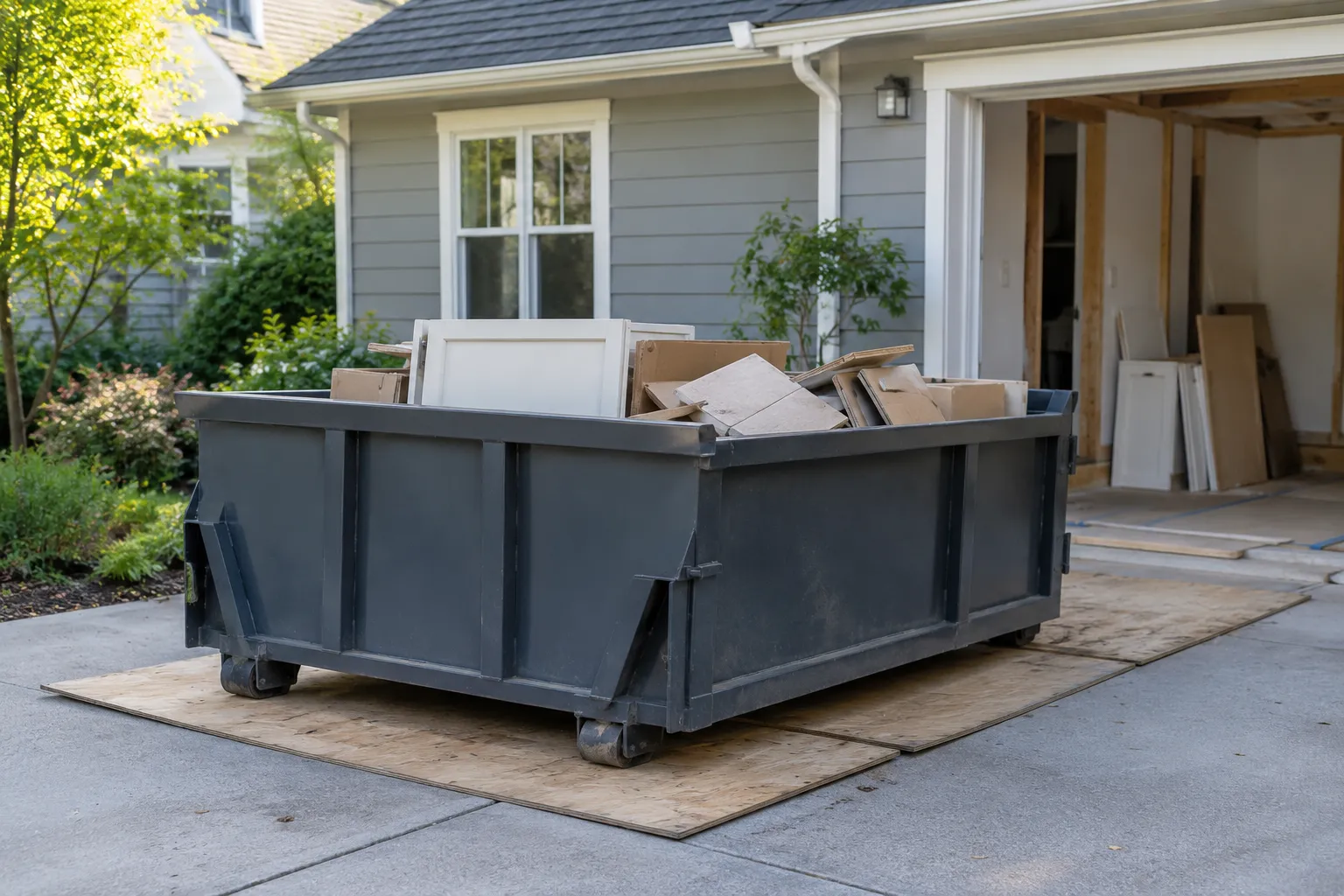
List the largest pieces first
Cabinets, shelving, furniture, doors, and long trim pieces control how efficiently a container can be loaded. Record rough dimensions and quantities. Breaking an item down may save space, but only do so when it is safe and the material does not require special handling.
Separate dense material
Tile, plaster, shingles, soil, brick, and concrete can outweigh much bulkier household debris. Describe dense debris independently and ask whether it needs its own load or a specific container.
Allow for imperfect loading
Real loads contain gaps. Bags, broken pieces, and awkward items rarely stack like boxes. Do not plan to use every cubic inch, and never compact material with unauthorized equipment or climb into a container.
Confirm the actual unit
Size labels differ between fleets. Ask for the available container’s exterior dimensions, fill line, material rules, and weight terms. Check that the door can open, if applicable, without taking away the access path you need to load.
Working checklist
- Largest items measured
- Dense material listed separately
- Loading gaps allowed for
- Actual container dimensions requested
- Door and walking clearance reserved
- Special items disclosed
Need an address-specific answer?
Use the companion Small Dumpsters page, then call with the site and debris details.
Call (678) 697-8928